Keramika vs metal: Co je lepší pro zuby a proč to vlastně má smysl
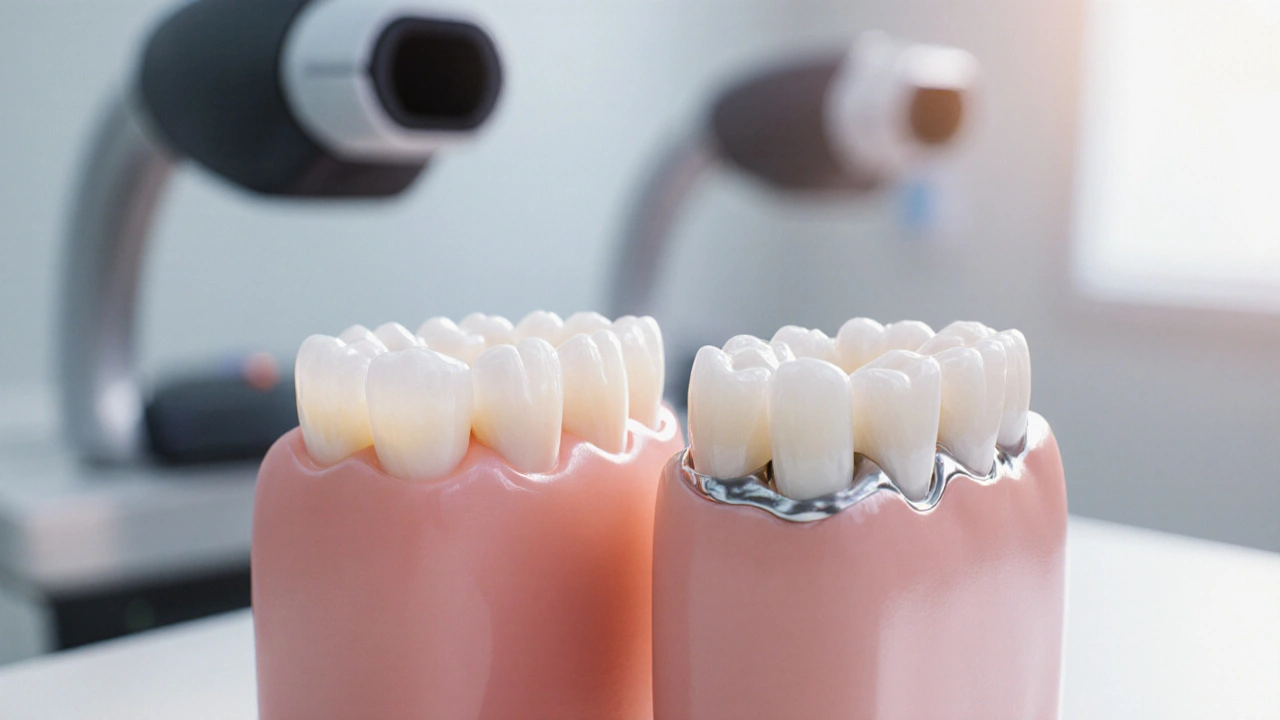
When choosing between keramika, výplň nebo korunka z umělé skloviny, která vypadá jako přirozený zub a neodhalí žádné kovy. Also known as keramické náhrady, it is the go-to choice for front teeth where appearance matters most. and metal, kovové konstrukce, obvykle z slitin chromu, niklu nebo zlata, které jsou silné a dlouhověké, ale nejsou estetické. Also known as kovové náhrady, they are often used in back teeth where strength trumps looks. isn’t just about price — it’s about your daily life. You don’t want a crown that shows when you laugh, but you also don’t want one that cracks after two years. The choice between these two materials affects how you eat, how you smile, and even how you feel about your own mouth.
Let’s be real — most people think keramika is the obvious winner because it looks natural. And it is, for front teeth. But if you grind your teeth at night or have a strong bite, metal might actually last longer. Studies show that metal crowns survive 15–20 years on average, while keramika often needs replacement after 10–15, especially under heavy pressure. That doesn’t mean keramika is weak — modern zirconia-based ceramics are nearly as tough as metal. But they still chip more easily if you bite down on hard candy or open bottles with your teeth. Metal? It bends before it breaks. And it’s cheaper. Much cheaper. In the Czech Republic, a metal crown can cost half as much as a full ceramic one.
But here’s the thing no one tells you: the material isn’t the only factor. The skill of the dentist and the quality of the lab matter just as much. A poorly fitted metal crown can irritate your gums. A cheap keramika crown can look gray at the gum line if the metal base shows through. That’s why some dentists use a hybrid — metal inside for strength, ceramic outside for looks. It’s called keramika na metalu, korunka s kovovým jádrem a keramickým povrchem, která kombinuje sílu kovu a estetiku keramiky. Also known as metalokeramika, it’s still common in public clinics because it balances cost and durability. But even that has limits. If your gums recede, you’ll see a dark line. And if you’re allergic to nickel? Then metal is out. Keramika is the only safe bet.
So what should you pick? If you’re fixing a front tooth, go keramika. No debate. If it’s a molar that takes all the chewing force, metal might be smarter — unless you can afford a high-end all-ceramic crown made of zirconia. And if you’re on a budget, ask your dentist about metalokeramika. It’s not perfect, but it’s a solid middle ground. Don’t let marketing fool you. There’s no universal ‘best’ — only what’s best for your mouth, your habits, and your wallet.
Below you’ll find real stories and practical advice from people who’ve been through this decision. Whether you’re worried about appearance after a crown, wondering why your metal filling turned your gum black, or just trying to understand why your dentist suggested one thing over another — these articles will cut through the noise and give you clear, no-fluff answers.
-
Odhalení mýtů o keramických zubech: Co skutečně víte o keramických korunkách?
Odhalujeme nejčastější mýty o keramických zubech: jsou křehké? Drahé? Zbarvují se? Zjistěte, proč moderní zirkoniové korunky jsou spolehlivější než kovové a proč je většina lidí spokojená po 10+ letech.